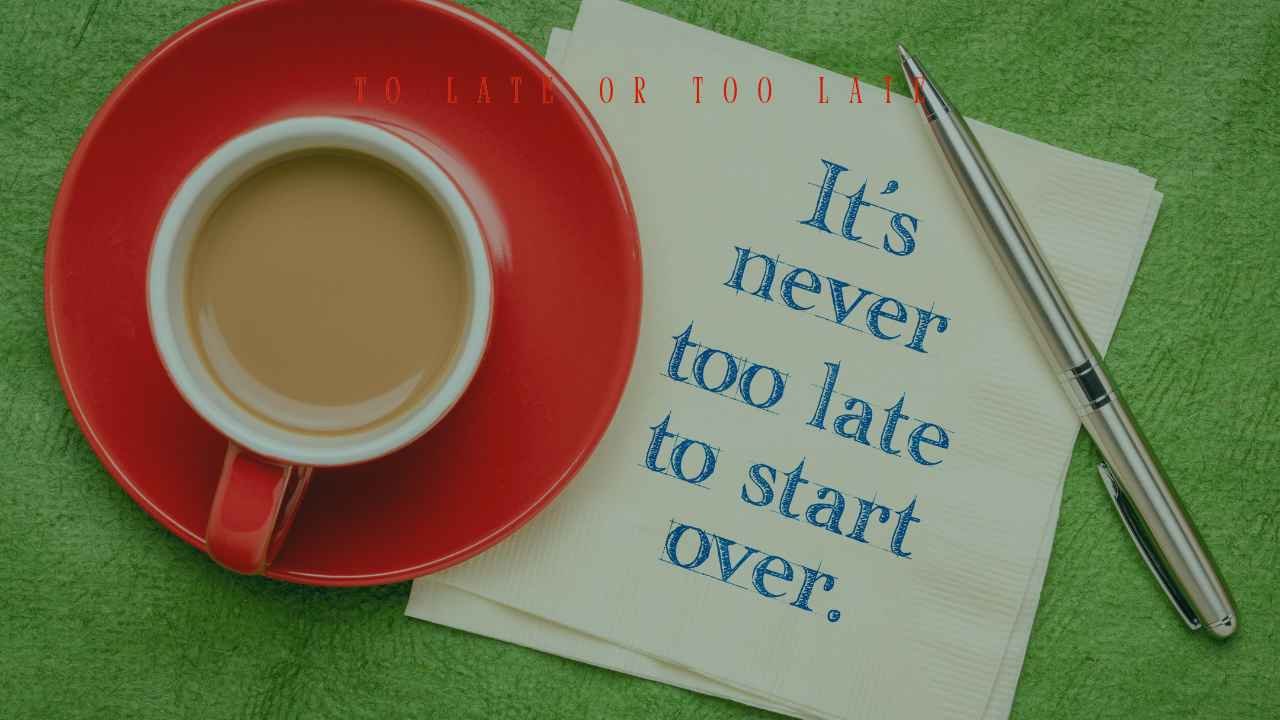
I’ve noticed that many people hesitate before writing to late or too late. If you’ve ever paused while sending a text, writing an email, or completing homework, you’re not alone. It’s one of the most common English mistakes because the words to and too look and sound similar.
The good news is that the difference is simple once you understand it. In this guide, you’ll learn which phrase is correct, when to use it, and how to avoid making the mistake again.
By the end of this article, you’ll be able to use too late naturally in conversations, writing, and everyday English.
Quick Answer: Is It “To Late” or “Too Late”?

The correct phrase is too late.
- Too means excessively, more than enough, or also.
- Late means after the expected or proper time.
So, too late means that something happened after the time when it should have happened.
Examples:
- I arrived too late for the movie.
- It’s never too late to learn a new skill.
- She realized the truth too late.
The phrase to late is grammatically incorrect in standard English.
What Does “Too Late” Mean?
“Too late” describes a situation where an opportunity has passed or an action happens after the appropriate time.
People use it in many situations:
- Missing a bus.
- Submitting an assignment after the deadline.
- Realizing a mistake after consequences occur.
- Starting a new hobby later in life.
- Expressing regret.
The phrase can carry different emotions depending on the context:
| Context | Meaning |
| Daily life | Missing an opportunity |
| Education | Submitting work after a deadline |
| Relationships | Realizing feelings after a breakup |
| Career | Delaying an important decision |
| Inspiration | Encouragement that change is still possible |
Interestingly, many motivational speakers use the phrase positively: “It’s never too late.” This reminds us that while some chances disappear, many new ones are still waiting.
To Late or Too Late Comparison Table
| Phrase | Meaning | Correct Usage |
| To Late | Incorrect phrase | Never use in formal English |
| Too Late | After the proper time | Everyday writing and speech |
| Never Too Late | There is still time | Motivation and inspiration |
| A Little Too Late | Slightly delayed | Casual conversation |
| Too Late Now | Opportunity has passed | Informal speech |
| Better Late Than Never | Doing something late is better than not doing it | Proverbs |
| Too Late to Change | Change feels delayed | Self-improvement |
| Too Late for Class | Missed arrival time | School settings |
| Too Late for the Bus | Missed transportation | Daily life |
| Too Late to Apologize | Apology came after harm | Relationships |
| Too Late to Turn Back | Past the point of return | Stories and literature |
| Never Too Late to Learn | Learning has no age limit | Educational contexts |
Why “To Late” Is Incorrect
English grammar can be confusing because small words often have multiple meanings.
The word to is generally used:
- Before a verb.
- To indicate direction.
- To show a relationship between things.
Examples:
- I want to sleep.
- She walked to the store.
- Give the book to Alex.
Since “late” is an adjective, “to late” doesn’t form a complete or correct expression.
Meanwhile, too functions as an adverb and fits perfectly with adjectives:
- Too fast
- Too slow
- Too expensive
- Too late
A helpful trick is this:
If you can replace the word with very or excessively, use too.
For example:
- It is very late.
- It is excessively late.
- It is too late.
That simple test can save you from making this mistake in the future.
Common Examples of “Too Late” in Everyday English
You’ll hear “too late” almost everywhere. Here are some common examples:
School and Work
- I submitted my assignment too late.
- He arrived too late for the meeting.
- We applied too late for the scholarship.
Relationships
- She confessed her feelings too late.
- They apologized a little too late.
- He realized what he had lost too late.
Daily Life
- We got to the station too late.
- I woke up too late this morning.
- They ordered tickets too late.
Inspirational Usage
- It’s never too late to follow your dreams.
- You’re never too late to start over.
- It’s never too late to become the person you want to be.
These examples show that “too late” isn’t always negative. Sometimes, it’s used to encourage people to keep going.
The Difference Between “To,” “Too,” and “Two”
Many English learners confuse these three words because they sound identical.
| Word | Meaning | Example |
| To | Direction or part of a verb | I want to read. |
| Too | Also or excessively | It’s too cold outside. |
| Two | Number 2 | I have two brothers. |
Try reading these sentences:
- I am going to school.
- It is too late to leave.
- We have two tickets.
Understanding these differences will improve your grammar and make your writing clearer.
Popular Expressions Using “Too Late”

English includes many phrases built around “too late.”
Better Late Than Never
This means doing something late is still better than not doing it at all.
Never Too Late
A phrase commonly used for motivation and personal growth.
A Little Too Late
Used when someone reacts after a situation has already changed.
Too Little, Too Late
This expression means an effort was insufficient and delayed.
Before It’s Too Late
Often used as a warning to encourage immediate action.
These expressions appear in books, movies, songs, and everyday conversations, making “too late” one of the most useful phrases to learn.
Is “Too Late” Always Negative?
Not necessarily.
Many people associate “too late” with failure or regret, but context matters.
Negative examples include:
- We arrived too late for the concert.
- She learned the truth too late.
Positive examples include:
- It’s never too late to go back to school.
- It’s never too late to make healthier choices.
- It’s never too late to repair a friendship.
Language reflects emotion, and “too late” often helps us talk about time, change, and second chances.
Grammar Tips to Remember
Here are a few easy ways to remember the correct phrase:
- If you mean “excessively,” use too.
- If you’re talking about direction or a verb, use to.
- If you’re talking about the number 2, use two.
- Remember: Too has an extra “o” because it means something extra.
This memory trick is especially helpful for students and English learners.
To Late or Too Late Meaning
The correct phrase is “too late,” which means something has happened after the right or expected time. It is used when an opportunity, deadline, or suitable moment has already passed.
People commonly use “too late” when they miss an appointment, arrive after a deadline, or take action when it is no longer useful. It expresses that something cannot be done at the appropriate time.
The phrase can also describe situations where someone realizes their mistake after it is too late to change the outcome. For example, “It’s too late to apologize” means the opportunity to apologize has already passed.
To Late or Too Late Song
“Too Late” is a phrase commonly used in song titles across different music genres. Many singers and bands use these words to express regret, heartbreak, missed opportunities, or relationships that have reached their end.
Songs with the title “Too Late” often explore emotions connected to losing someone, making mistakes, or realizing the importance of a person after they are gone. The phrase gives listeners a sense of sadness and missed chances.
When searching for a song called “Too Late,” it is helpful to include the singer’s name or a few lyrics. This makes it easier to find the correct song among different artists and versions.
To Late or Too Late Synonym
Several words and phrases can be used instead of “too late,” depending on the context. Common alternatives include overdue, delayed, untimely, belated, past the deadline, and after the right time.
These synonyms help describe situations where something happens later than expected or when an opportunity is no longer available. However, each alternative may have a slightly different meaning.
For everyday conversations, phrases such as “missed the chance,” “past the deadline,” and “no longer possible” can also communicate the same idea. The best synonym depends on the sentence and intended meaning.
To Late or Too Late Lyrics
People often search for “Too Late” lyrics to find the words of a song they have heard or want to understand better. Since several songs share this title, identifying the artist can help narrow down the search.
Song lyrics often use the phrase “too late” to describe regret, emotional distance, heartbreak, and missed opportunities. Its meaning can change depending on the story and emotions expressed in the song.
If you are looking for lyrics from a particular song, searching with the artist’s name or a memorable line can make the results more accurate. This helps you find the correct version.
To Late Meaning
“To late” is generally an incorrect spelling when you want to say that something happened after the expected time. The correct expression is “too late,” where “too” means excessively or more than necessary.
The word “to” is usually used before a verb or to indicate direction, such as “to go” or “to school.” In contrast, “too” is used to express excess or agreement, depending on the sentence.
For example, “I arrived too late for the meeting” is grammatically correct. Remembering the difference between “to” and “too” can help you avoid this common English spelling mistake.
To Late or Too Late Answer
The correct answer is “too late,” not “to late,” when describing something that happens after the appropriate time. The word “too” is necessary because it indicates that the timing is beyond what is acceptable or useful.
For example, you should write “It is too late to call him” rather than “It is to late to call him.” This simple spelling difference makes the sentence grammatically correct.
If you are writing an article, message, or social media post, always use “too late” when referring to missed opportunities or delayed actions. It is the standard and widely accepted expression in English.
To Late or Too Late Examples
Understanding the phrase “too late” becomes easier when you see how it is used in everyday English sentences. It can describe missed deadlines, delayed decisions, late arrivals, and situations where an opportunity has passed.
For example, “It’s too late to catch the bus” means the bus has already left. Similarly, “You are too late to enter the competition” means the deadline or entry opportunity has passed.
Another example is “I realized my mistake too late,” which explains that someone understood an error after the chance to correct it was gone. These examples show the correct use of the phrase in different situations.
Common Mistakes People Make
Many people accidentally write:
- ❌ To late
- ❌ I am too go home.
- ❌ There are too apples.
- ❌ I have to dogs.
The corrected versions are:
- ✅ Too late
- ✅ I am to go home. (Though “I am going home” is more natural.)
- ✅ There are two apples.
- ✅ I have two dogs.
Practicing these examples regularly can improve both your writing and speaking skills.
“Too Late” in Literature, Movies, and Music
The phrase “too late” appears frequently in entertainment because it expresses emotion so effectively.
Writers use it to communicate:
- Regret
- Missed opportunities
- Hope
- Change
- Redemption
You may notice characters saying things like:
- “Is it too late?”
- “We’re too late!”
- “It’s never too late.”
These short lines are memorable because nearly everyone has experienced moments when time felt important.
How to Avoid This Mistake Forever

If you still find yourself typing “to late,” try these habits:
- Pause before hitting send.
- Use grammar-checking tools.
- Read your sentence aloud.
- Ask yourself: “Does this mean excessively late?”
- Remember the extra “o” trick.
After a few weeks of practice, using “too late” correctly will become automatic.
FAQs About To Late or Too Late
Is “to late” ever correct?
No. “To late” is not considered correct in standard English grammar. The proper phrase is always “too late.”
Why do people write “to late”?
People confuse “to” and “too” because they sound the same when spoken. This type of mistake is called a homophone error.
What does “too late” mean?
“Too late” means something happened after the appropriate or expected time.
Is “never too late” grammatically correct?
Yes. “Never too late” is a common and grammatically correct expression used to encourage people.
What is the easiest way to remember the difference?
Remember that too has an extra “o” for something extra. If something is excessively late, use “too.”
Can I use “too late” in formal writing?
Yes. The phrase is appropriate in both formal and informal writing when used correctly.
What is another phrase similar to “too late”?
Common alternatives include:
- Better late than never
- Past the deadline
- Missed the opportunity
- Out of time
Is “too late” a negative phrase?
Not always. While it can describe regret, it is also used positively in phrases like “It’s never too late to learn.”
Final Thoughts
The answer to to late or too late is straightforward: too late is always the correct choice. Understanding the difference between to, too, and two can instantly improve your English and help you write with more confidence.
The next time you hesitate, remember the simple rule: if something is excessively or unexpectedly late, add the extra “o.” And perhaps most importantly, when it comes to learning and growing, it’s truly never too late.
Relevant Articles.

Hello! I’m Ethan Brooks, a writer who believes that the right words can change a person’s day. I enjoy creating meaningful quotes about life, success, motivation, happiness, and personal growth. I write to inspire readers to stay positive, dream bigger, and never stop learning.
Every quote I share comes from my passion for storytelling and real-life experiences. My goal is to help people find hope, confidence, and motivation through simple yet powerful words.
Books I Have Written:
- The Power of Positive Words
- Everyday Lessons for a Better Life
 Sophia Carter